When You Need a Plumbing Permit in Collier County
Permit requirements come up more often than homeowners expect, and skipping one when it's actually required can create real problems down the line.
Article Info
The General Rule In Collier County
Most plumbing work that involves altering, adding, or replacing supply or drain lines, water heater installation or replacement, sewer line work, and septic system work generally requires a permit under Collier County's adopted Florida Building Code Plumbing provisions. Simple like-for-like fixture swaps, replacing a faucet or a toilet with an equivalent unit without altering the underlying plumbing, typically don't require a separate permit, though it's always worth confirming for your specific situation rather than assuming.
The Real Risk Of Skipping A Required Permit
Unpermitted work that should have been permitted creates real problems at resale, since a home inspection or a buyer's due diligence can surface it, sometimes requiring retroactive permitting or even removal and redoing the work correctly before a sale can close. Insurance claims involving unpermitted work can also face complications, since insurers sometimes deny or reduce coverage tied to work that wasn't done to code and properly documented.
What Happens When We Pull A Permit
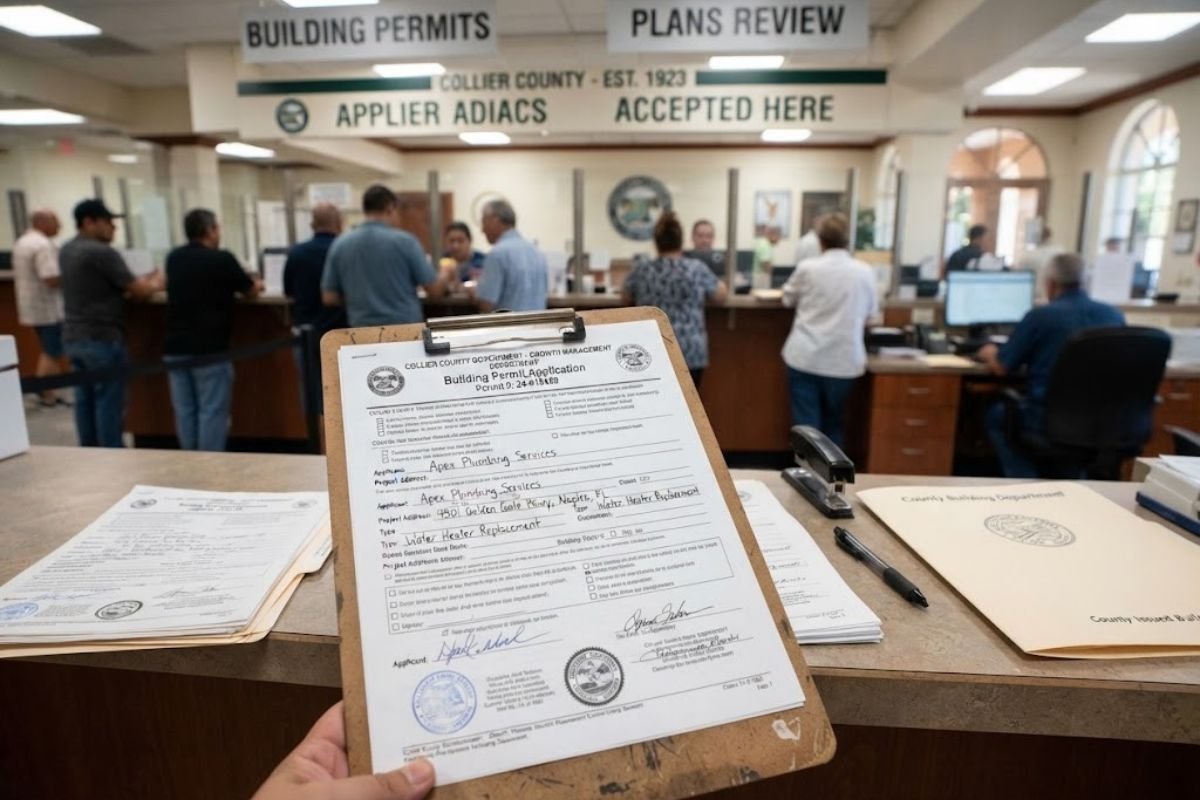
When a job requires a permit, we handle the application and submission as part of the job, which includes providing the necessary documentation to Collier County's permitting office. Depending on the job, an inspection may be required before the work is considered complete, which we schedule and coordinate as part of the process. This adds a small amount of time to the overall project but protects you as the homeowner in every way that matters.
We factor permit timelines into our project scheduling from the very start, so the overall estimate you receive already accounts for this step rather than surprising you with an unexpected delay partway through the job. This kind of upfront transparency is genuinely part of doing the job right, not an afterthought we add once a project is already underway.
A Different Process For Septic Work
Septic system work falls under Florida Department of Health regulations rather than the standard building permit process, with its own separate application and inspection requirements. Routine pumping doesn't typically require a permit, but repairs, modifications, or drain field work generally do. Given how much of Collier County's unincorporated area relies on septic, understanding this distinction matters for a meaningful share of local homeowners.
What This Means If You're Doing Work Yourself
Homeowners doing their own plumbing work are generally still required to pull the same permits a licensed contractor would for work that requires one, county rules don't typically exempt DIY projects from permitting requirements just because a licensed professional isn't doing the work. This is worth knowing before starting a larger DIY project, since the permit requirement doesn't disappear just because you're handling the labor yourself.
What People Often Get Wrong About Permits
A common misconception is that permits are only for major renovations or new construction, when in reality plenty of routine repair and replacement work, a water heater swap being the clearest example, requires one too. Another is that permits are mainly a bureaucratic hurdle with no real benefit, when they actually exist to confirm work meets safety and code standards that protect the home and its future occupants, including whoever eventually buys it from you.
How We Handle This For You
We know which jobs require permits in Collier County and handle the application process as a standard part of any job that needs one, so you don't have to navigate the county's permitting system yourself. If you're ever unsure whether a specific job you're considering needs a permit, we're happy to answer that question directly before any work begins.
Why This Matters For Home Purchases Too
If you're buying a home in Collier County, particularly an older one, checking county records for permit history on any major plumbing work is a reasonable step during due diligence. A seller who made significant plumbing changes without permits may not have disclosed it, and finding out after closing puts the resolution cost on you as the new owner rather than the person who did the unpermitted work in the first place.
What A Permit Inspection Actually Checks
A plumbing inspection tied to a permit generally verifies that the work meets current code requirements, proper pipe sizing, correct venting, appropriate materials for the application, and safe, code-compliant installation overall. It's not a formality, it's a genuine check that catches installation issues before they become problems, which is exactly the protection permitting is meant to provide homeowners in the first place.
Permitting FAQ
Does replacing a water heater always require a permit?
Generally yes, in Collier County, whether it's a like-for-like replacement or an upgrade, since water heater installation falls under standard plumbing permit requirements.
How long does the permitting process typically add to a project timeline?
It varies, but for routine plumbing permits it's often a matter of days rather than weeks, and we factor that timeline into project scheduling upfront.
What happens if I find out previous work in my home was never permitted?
It's worth addressing, particularly before selling. We can assess what was done and help determine the right path toward getting it properly documented.
Do you handle the permit application, or is that my responsibility?
We handle it as a standard part of any job requiring a permit, so you don't need to navigate that process yourself.
Planning A Plumbing Project And Not Sure About Permits?
Our general plumbing repair service and water heater replacement service both include permit handling when a job requires one, so you can move forward without navigating the county's process yourself.