Emergency Water Damage Restoration in Naples, FL
Standing water from a burst pipe, storm intrusion, or a failed appliance needs to be extracted and dried fast, before it reaches drywall, subfloor, and framing. Our restoration crew responds around the clock, every day of the year.
Water Damage Response
The First 24 To 48 Hours Matter Most
Standing water starts wicking into drywall, baseboards, and subflooring within hours, and mold growth becomes a real risk once materials stay wet past the first day or two. Naples' humid, coastal air slows natural drying even after standing water is gone, which is why extraction speed and mechanical drying matter more here than in a drier inland climate.
What Usually Brings Water Into A Naples Home
Burst Or Failed Supply Line
A sudden pipe failure behind a wall or under a sink can release hundreds of gallons before it's noticed.
Storm And Wind-Driven Rain
Hurricane season intrusion through roof penetrations or window seals is a real, recurring cause here.
Failed Water Heater
A tank that fails internally can empty its full contents onto the surrounding floor quickly.
Sewage Backup
A backed-up main line can push contaminated water into the lowest fixtures in the home.
Extraction, Drying, And What Comes After
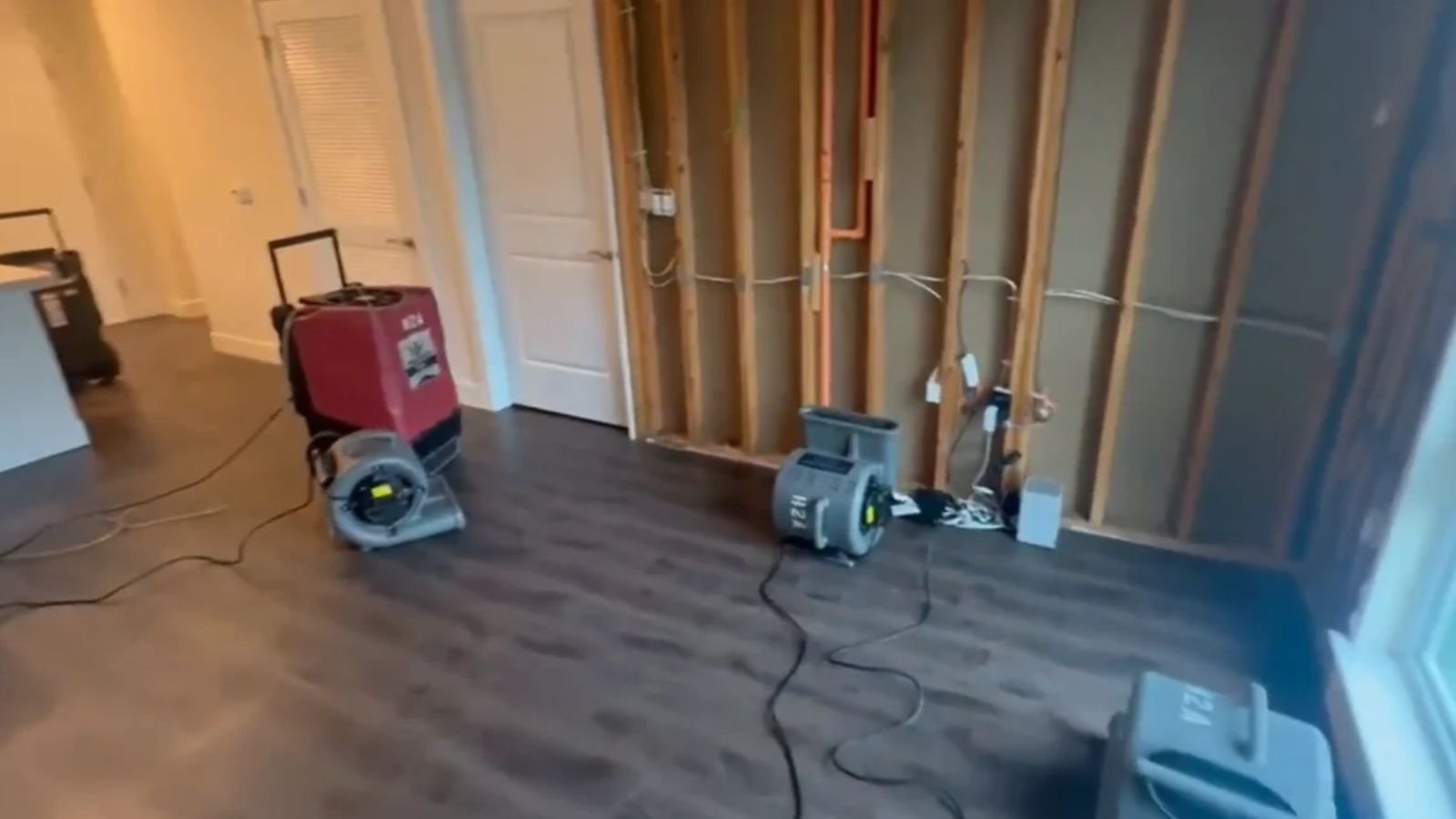
We start by stopping the water source if it's still active, then extract standing water with truck-mounted or portable equipment. Air movers and dehumidifiers run for several days to bring affected materials back to a normal moisture level, checked with a moisture meter rather than a guess. Anything that can't be dried safely, like saturated drywall or carpet padding, gets removed rather than left to grow mold behind the walls.
Want your real number instead of a range? Call (833) 521-1033.
What To Do Before We Arrive
- If the water source is still active and you can safely reach the main shutoff, turn it off before doing anything else.
- Move furniture, rugs, and electronics out of standing water where it's safe to do so.
- Photograph the affected area and any damaged belongings before cleanup begins, for your insurance file.
- Don't use a household vacuum on standing water. Wait for extraction equipment rather than risking an electrical hazard.
- If the water is from a sewage backup rather than clean supply water, keep people and pets out of the affected area entirely until it's been treated.
Fixing The Source, Not Just The Water
Water damage restoration addresses the water that's already in the home. If a plumbing failure caused it, that repair is handled separately under our standard plumbing line, not this service, since restoration and the plumbing fix are genuinely different jobs. A burst supply line becomes a leak detection and repair call, and a failed water heater becomes a water heater replacement. We can coordinate both visits so the repair and the drying happen close together.
Our restoration process follows the IICRC S500 standard for professional water damage restoration, the industry-recognized reference for extraction, drying, and moisture verification that legitimate restoration work is measured against.
Why Drying Takes Longer Near The Gulf
Naples' year-round humidity means the air itself is already carrying more moisture than a drier inland climate, which slows how fast wet materials can release moisture back into the air even with equipment running. We account for this by running dehumidifiers longer and checking moisture levels more frequently than a restoration job in a low-humidity market would need, rather than pulling equipment on a fixed schedule that doesn't reflect the local climate.
Water Damage FAQ
How fast can you get here after a pipe bursts?
We dispatch 24/7 and treat active water intrusion as a priority call, day or night.
Will insurance cover water damage restoration?
Most homeowner policies cover sudden, accidental water damage. We can document the loss with photos and moisture readings to support your claim, though we're not able to guarantee any specific insurer's decision.
Do you also fix the plumbing problem that caused the water damage?
We coordinate with our plumbing team so both the repair and the drying happen close together, though they're billed as separate jobs since they're different types of work.
How do I know if drywall needs to be removed or can just be dried?
We check with a moisture meter. Drywall that's been wet only briefly can often be dried in place; drywall saturated for an extended period usually needs to come out to prevent mold.
Water actively coming in right now? Call (833) 521-1033.