Sewer Line Repair in Naples, FL
A sewer line that backs up more than once, or a yard that's suddenly soggy along the line's path, usually means a crack, offset joint, or root intrusion somewhere in the lateral. We confirm exactly where before recommending a fix.
Sewer Line Service
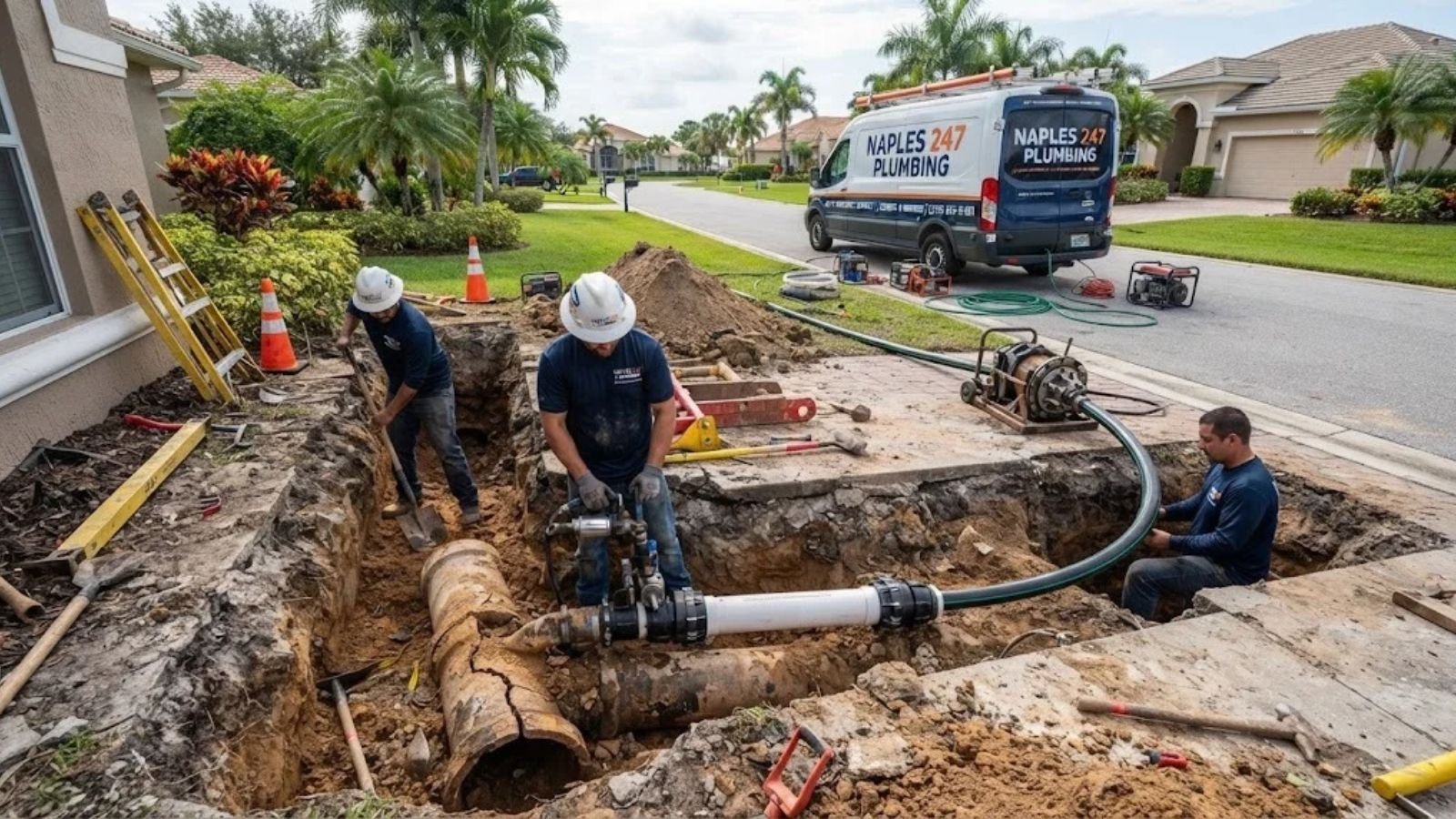
Older Lines, Root Growth, And Shifting Soil
Naples' older neighborhoods have a mix of clay and cast iron sewer laterals, and both develop small joint gaps over decades that mature tree roots find and exploit. Sandy soil that shifts over time can also cause a section of pipe to settle unevenly, creating a low spot, called a belly, where waste collects instead of draining. Either problem shows up first as a repeat clog, not an obvious break.
When It's The Line, Not Just A Clog
Repeat Backups
The same drain or the whole house backing up more than once in a year points to the line itself.
Soggy Or Sunken Yard Patch
A low, wet, or unusually green area along the line's path can mean it's leaking underground.
Sewage Odor Outdoors
A persistent smell near where the lateral runs is worth investigating before it becomes a backup.
Spot Repair, Trenchless Lining, Or Full Replacement
A single crack or offset joint often only needs a spot repair at that exact location, found and confirmed with a camera first. A line with root intrusion at multiple points may be a better fit for trenchless pipe lining, which rehabilitates the pipe from inside without full excavation. A severely deteriorated or heavily bellied line sometimes needs full replacement. We'll show you the camera footage and explain which category your line falls into before quoting.
Want your real number instead of a range? Call (239) 522-0887.
How We Confirm Before We Repair
Every sewer line repair starts with a sewer camera inspection so you see exactly what we see before agreeing to anything. If the immediate problem is just a clog rather than a structural issue with the line, drain cleaning or hydro jetting may resolve it without any excavation at all.
Real Standards, Not Guesswork
Sewer line repairs in Florida follow the Florida Building Code, Plumbing, which sets requirements for pipe slope, material, and joint standards. A repair that doesn't maintain the correct slope can create a new low spot even while fixing the original problem, which is why we verify slope with the camera after the repair, not just before it.
Permits are required for sewer line repair work in Collier County, and we pull those as part of the job. A repair completed without the required permit and final inspection can complicate a future home sale, when the lack of documentation raises questions a buyer's inspector will flag.
Root Intrusion From Established Landscaping
Naples' older, established neighborhoods often have mature oaks and other large trees planted decades ago, sometimes close to where the original sewer lateral was run. Root systems are drawn to the moisture and nutrients inside a sewer line and will exploit even a small joint gap over time, which is why root intrusion shows up more often in these established areas than in newer construction with modern PVC lines and root barriers.
Sewer Line FAQ
Do I need to see the camera footage before agreeing to a repair?
We show it to you as standard practice, not just on request, so you understand exactly what's being fixed and why.
Will my yard be torn up for the repair?
Not necessarily. Spot repairs and trenchless lining both minimize excavation compared to a full traditional dig, which we'll only recommend when it's genuinely the right fix.
How long does trenchless lining take?
Most residential lining jobs are completed in a single day once the camera inspection and prep work are done.
Can tree roots grow back into a repaired line?
If the underlying joint gap isn't addressed, yes. Trenchless lining creates a seamless new interior surface that roots can't easily re-enter, which is part of why we recommend it for root-related repeat problems.
How do I know if I need a spot repair or a full replacement?
The camera inspection tells us. A single confirmed defect usually means a spot repair; multiple defects or a badly bellied section across a longer run usually points toward replacement or full-length lining, and we'll explain which category your line falls into with the footage in hand.
Sewer backing up? Call (239) 522-0887.