Leak Detection in Naples, FL
A rising water bill, a warm spot on the floor, or the sound of running water with every fixture off usually means a hidden leak. We find it without guessing, and without tearing your home apart to look.
Leak Detection In Naples
Water Bill Up And Nothing Obvious Is Wrong?
That combination, a higher bill with no new leaks in sight, is the single most common reason Naples homeowners call us. Most of the time the water is running somewhere you can't see it: under the slab, inside a wall, or along a buried supply line between the meter and the house. Electronic leak detection is how we find that spot without opening up the whole floor to look for it.
Naples' Slab Foundations Hide Leaks Well
Most homes in Naples and across Collier County sit on a concrete slab rather than a basement, so a supply line leak under the slab has nowhere obvious to show itself. Sandy, shifting soil under the slab adds stress to copper piping over time, and in older homes built before the 1990s, that stress plus age is the most common combination behind a slab leak. Coastal humidity also means a slow leak can run for weeks before a homeowner notices anything beyond a slightly damp patch of carpet or a warmer-than-usual section of tile.
How A Hidden Leak Usually Shows Up
Higher Water Bill
A bill that jumps with no change in household water use is the most reliable early sign.
Warm Or Damp Floor Spot
A hot water line leaking under the slab often creates one warm patch of tile or flooring.
Running Water Sound
Hearing water move through the walls or floor with every fixture in the house shut off.
Unusually Green Patch Of Lawn
One noticeably greener or wetter area of yard can point to a leaking underground supply line.
Detection Methods We Actually Use
We start with the least invasive option and only escalate if it's genuinely needed.
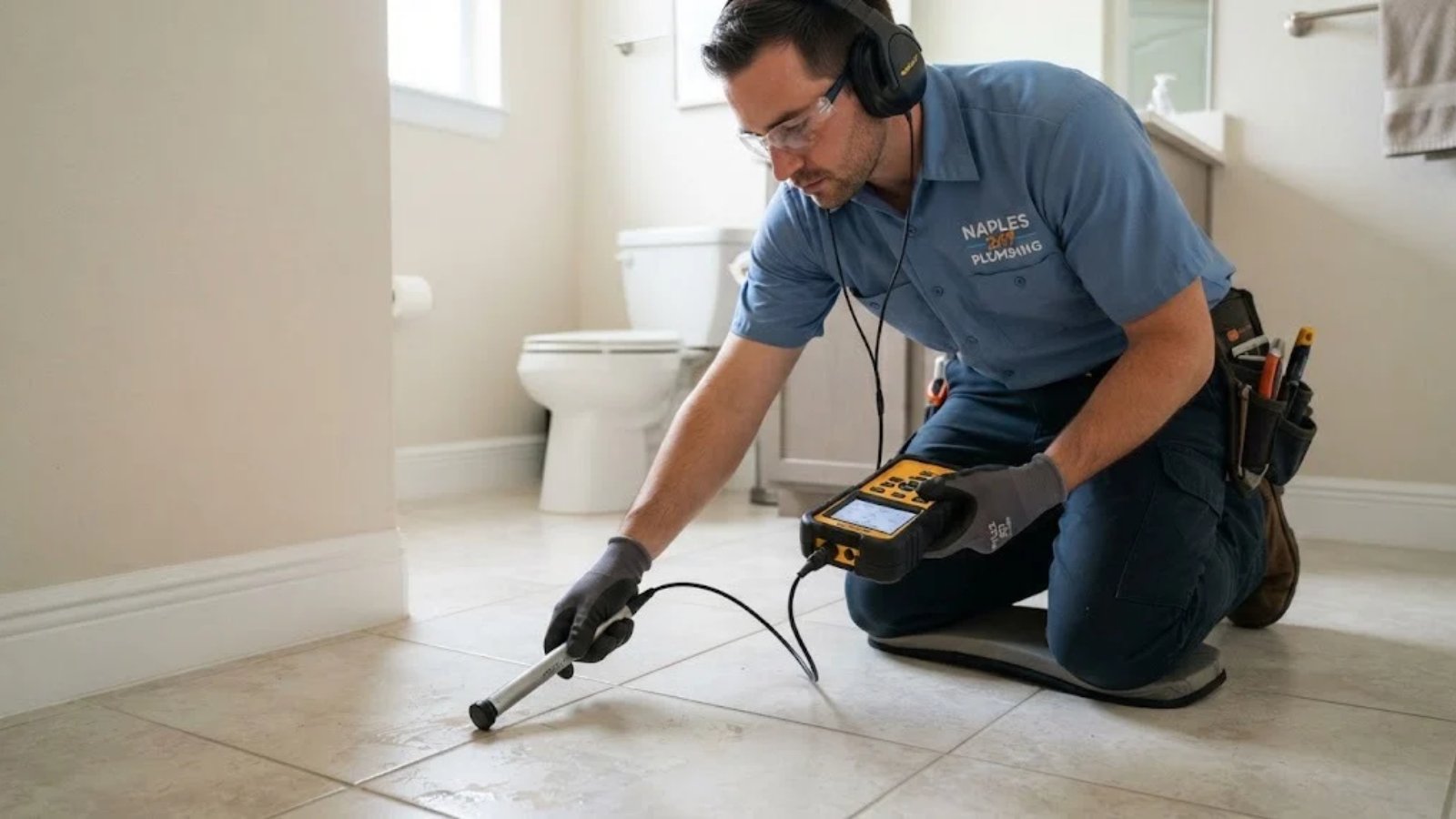
- Acoustic listening equipment picks up the sound signature of pressurized water escaping through a pinhole in a pipe, even through concrete.
- Pressure testing isolates which line, hot or cold, the leak is on before any physical search begins.
- Thermal imaging can reveal a hot water line leak under a slab as a heat pattern invisible to the eye.
- Tracer gas testing is used on harder cases, a safe, non-toxic gas is introduced into the line and a sensor traces where it escapes.
In nearly every case, this lets us confirm the leak's location before any concrete or drywall is opened.
Typical Cost Ranges
- Access: a leak located under a slab or behind finished drywall costs more to repair than one in an open crawlspace or garage wall.
- Pipe material: older galvanized lines often warrant a broader repair than a single-point fix on newer copper or PEX.
- Repair path: once we confirm the location, we'll walk you through spot-repair versus reroute options and the real cost difference between them.
Want your real number instead of a range? Call (239) 522-0887.
If The Leak Turns Out To Be...
Detection is the first step. Once we know where the leak is, the fix depends on what we find. If it's under the slab, that usually means slab leak repair. If age and pipe material are the underlying issue across the whole house, we'll talk through whole-home repiping as an option instead of chasing repeated pinhole leaks. And if standing water has already reached drywall or flooring by the time you call, ask about our water damage restoration service too. Homeowners in Golden Gate Estates should note that a sudden spike in well pump run time can point to the same kind of hidden leak, just on the supply side of a private well system rather than a municipal line.
Any repair work we perform follows the Florida Building Code, Plumbing, which sets the material and installation standards licensed plumbers work under statewide. That matters most on a repair like this because a spot fix done to code holds up over years, not just until the next inspection, and it keeps the repair from becoming a liability if you sell the home later.
From First Call To Confirmed Location
Most leak detection visits follow the same basic sequence. We start by asking what you've noticed, a bill spike, a sound, a damp spot, since that narrows down which lines to test first. Next comes pressure isolation to confirm whether the leak is on the hot or cold side, then the acoustic or thermal survey to narrow the physical location. In most residential cases we can point to the leak's location within a few feet, which is what keeps the eventual repair small. We'll show you what we found before recommending anything, not just tell you a number.
Leak Detection FAQ
My water bill went up but I don't see any leak. What's going on?
This is the most common call we get. In most cases the leak is under the slab or inside a wall where it can't be seen, and electronic detection is how we confirm exactly where before opening anything up.
Do you have to cut into my floor to find a leak?
Not to find it. Acoustic and thermal equipment let us pinpoint the location first, so any opening we make for the repair is targeted rather than exploratory.
How long does leak detection take?
Most residential leak detection visits take one to two hours depending on the size of the home and how many lines need to be tested.
Is leak detection covered by homeowners insurance?
Most policies cover sudden, accidental water damage caused by a leak but not the cost of finding or repairing the leak itself. Check your specific policy or ask your insurer before the visit.
Still not sure what's going on? Call (239) 522-0887 and describe what you're seeing.