What Causes Slab Leaks in Naples Homes
Slab leaks come up more often in Naples than in a lot of the country, and it isn't random. A specific combination of soil, foundation type, and pipe age drives it.
Article Info
Why Slab Foundations Make This A Naples Problem
Most homes in and around Naples are built on concrete slab foundations rather than raised foundations with a crawl space underneath. That means the water supply lines running to the kitchen, bathrooms, and laundry area are often poured directly into or under that slab. When one of those lines develops a leak, there's no crawl space to spot it in early, the water just sits under the concrete until it finds a way up through a crack or a floor seam, or it shows up as a spike on the water bill first.
How Southwest Florida's Soil Contributes
Sandy soil, common across much of Collier County, shifts more than denser soil types as moisture levels change with the seasons. That subtle ground movement puts stress on rigid pipe over years, particularly at joints and fittings, which is where a slow leak is most likely to start. It's a gradual process, which is part of why slab leaks tend to show up in homes that are already a couple decades old rather than in brand new construction.
Pipe material matters here too. Homes built with copper supply lines decades ago are now old enough that pinhole leaks from gradual corrosion are a real, documented failure pattern in copper piping, particularly with certain water chemistry profiles. Homes with polybutylene piping, common in some construction from the 1980s and early 1990s, carry their own separate failure history that's well documented industry-wide, and if your home falls into that build window it's worth knowing which pipe material was actually used.
What A Slab Leak Actually Looks Like Before It's Obvious
A noticeably warm spot on an otherwise cool tile or concrete floor is one of the more distinctive early signs, especially if it's on a hot water line. A sudden, unexplained jump in the water bill with no corresponding change in household water use is another strong indicator. The sound of running water when every fixture in the house is off, audible if you listen closely near a wall or floor, is also worth taking seriously.
Left unaddressed, a slab leak can eventually cause visible cracking in the flooring or foundation, or mold growth from sustained moisture. Catching it at the warm-spot or water-bill stage, rather than the visible-damage stage, makes for a dramatically simpler and cheaper repair.
How We Actually Locate A Slab Leak
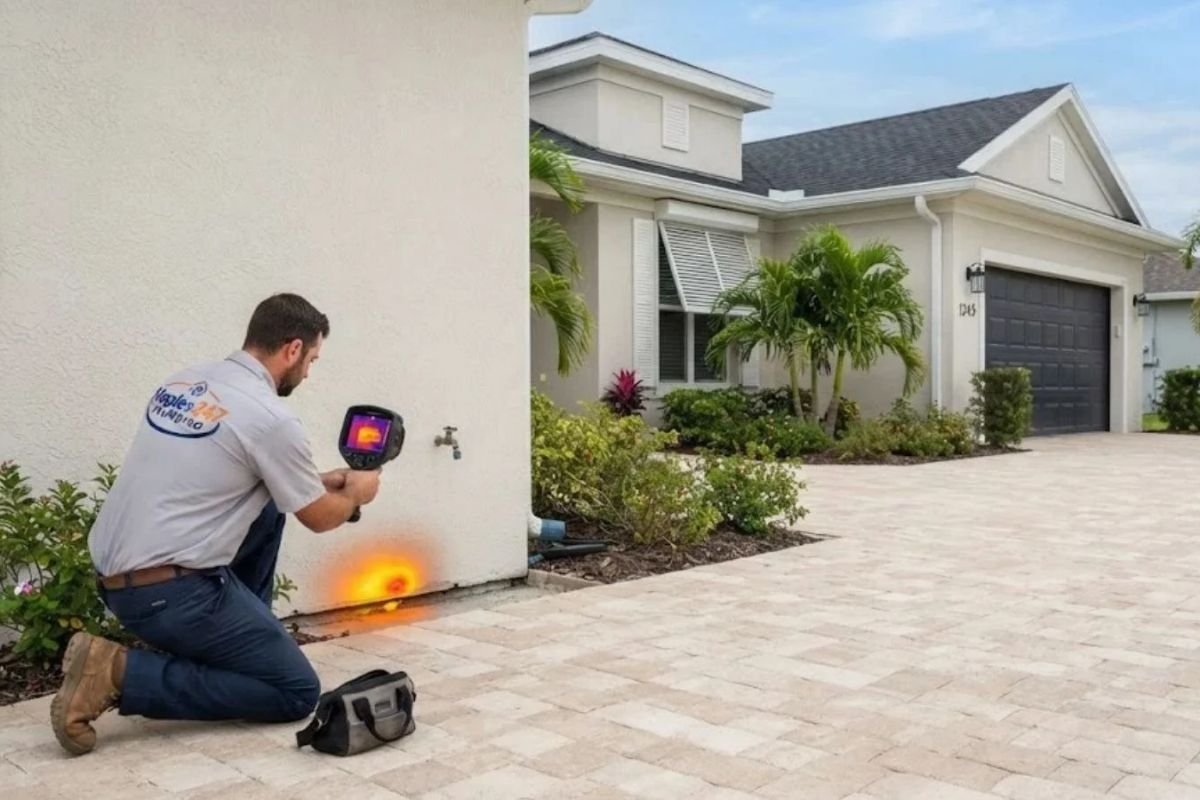
We use acoustic listening equipment and, where useful, thermal imaging to pinpoint a slab leak's location before any concrete gets touched. That precision matters, since breaking into a slab in the wrong spot means unnecessary demolition and repair cost. Depending on the leak's location and the pipe's condition elsewhere, the fix is sometimes a direct spot repair and sometimes a reroute that bypasses the slab section entirely, which we'll walk you through once we've actually located the problem rather than guessing at an approach beforehand.
Deciding Between A Spot Fix And A Full Reroute
A single, isolated leak in an otherwise sound pipe is usually a candidate for a direct spot repair, cutting into the slab at the precise leak location and fixing that section only. But if the pipe shows signs of broader corrosion, or if this is the second or third slab leak in the same home over a few years, rerouting that line entirely above the slab, typically through the attic or exterior walls, often makes more sense. It costs more upfront but avoids repeated slab cuts and repair cycles on a pipe that's clearly failing throughout its length, not just at one point.
We walk through both options with actual cost and timeline numbers for your specific situation before any work begins, rather than defaulting to whichever approach is easier for us. It's your home and your budget, and the right call genuinely depends on the pipe's overall condition, not just the one leak we happened to find.
Can Slab Leaks Be Prevented Entirely
Not entirely, since the underlying causes, soil movement and gradual pipe aging, aren't things a homeowner controls day to day. But a periodic leak detection check, particularly once a home passes the 20-year mark, catches problems while they're still small and cheap rather than after they've caused visible damage. Monitoring your water bill for unexplained increases is a free, ongoing form of early detection that costs nothing and catches a real percentage of slab leaks before they become obvious any other way.
Slab Leak FAQ
Is a slab leak always an emergency?
Not always, but an active leak that's actively worsening or causing visible water intrusion should be treated as one. A slow, early-stage leak still needs prompt attention but has more flexibility on timing.
Will my homeowner's insurance cover slab leak repair?
It varies by policy and by whether the damage is from the leak itself versus a pre-existing condition. We're happy to document our findings in a way that supports whatever claim you decide to file.
Is repiping the whole house ever the better option instead of a spot repair?
For an older home with copper pipe that's had more than one slab leak, a full repipe rerouted above the slab is often more cost-effective long-term than repeated individual repairs.
Notice A Warm Spot Or A Spike In Your Water Bill?
Our slab leak detection and repair service uses acoustic and thermal equipment to locate the problem precisely before any concrete work begins. If you're not sure whether what you're dealing with is a slab leak or something else, our general leak detection service can help rule it in or out.