Are Tankless Water Heaters Worth It in SW Florida
Tankless water heaters come up in almost every water heater conversation we have now, and the honest answer is that they're right for some homes and not others.
Article Info
The Basic Difference From A Tank Unit
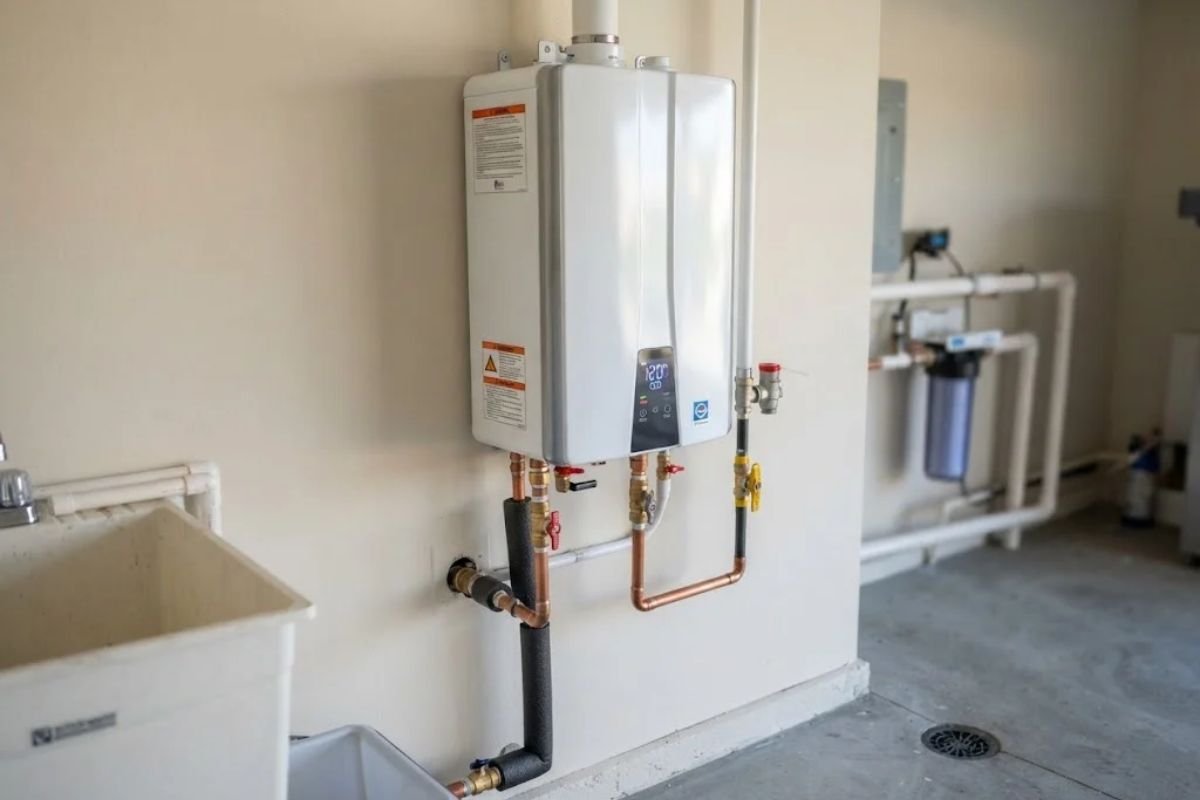
A tankless unit heats water on demand as it flows continuously through the unit, rather than storing and continuously reheating a large volume like a traditional tank does. That means, in theory, a truly endless supply of hot water rather than running out mid-shower, and no standby energy loss from keeping a full tank hot around the clock when no one's using it.
What Tankless Actually Costs Versus A Tank Unit
Upfront, a tankless system typically costs more than a comparable tank unit, both in equipment and installation, particularly if your home needs upgraded gas lines or electrical service to support it. Where tankless tends to win is over the long run, with lower energy costs from eliminating standby loss and a meaningfully longer expected service life, often 15 to 20 years compared to 8 to 12 for a tank unit. Whether that math works out in your favor depends on how long you plan to stay in the home, your household's hot water demand, and how your local utility rates compare.
Why Water Hardness Matters More For Tankless Units
Tankless heat exchangers are more sensitive to mineral scale buildup than a standard tank, since the water passes through narrow internal passages that scale can restrict more noticeably over time. For well-water households in particular, pairing a tankless installation with a water softener isn't just a nice-to-have, it's genuinely important for protecting the investment and keeping the unit performing at its rated efficiency for its full expected lifespan.
The Households Where Tankless Makes The Most Sense
Larger households with high simultaneous hot water demand, multiple bathrooms running at once, back-to-back showers, laundry and dishwashing overlapping with bathing, see the clearest benefit from a tankless system's continuous supply. Smaller households or vacation homes with lighter, more occasional use sometimes see a longer payback period on the higher upfront cost, since the standby-loss savings matter less when the unit isn't running frequently regardless of type.
What Ongoing Care A Tankless Unit Requires
A tankless unit generally needs a descaling flush on a regular schedule, more frequently in hard water areas, to keep the heat exchanger clear and the unit running efficiently. Skipping this maintenance is the single biggest reason a tankless unit underperforms or fails prematurely, and it's a more involved process than the simple sediment flush a tank unit needs, generally requiring a pump and descaling solution circulated through the system.
What A Conversion From Tank To Tankless Involves
Switching from an existing tank unit to tankless isn't always a simple swap. Gas-fired tankless units often require a larger gas line than a home's existing tank setup used, and venting requirements differ meaningfully between the two types. We assess your home's existing infrastructure honestly before quoting a conversion, since surprises mid-installation are exactly what we aim to avoid with an upfront, thorough assessment.
Our Honest Take On Making The Call
We install both types regularly and don't push tankless on every household, because it genuinely isn't the right fit for everyone. For a straightforward replacement with a similar household size and usage pattern to before, a quality tank unit is often the more practical choice. For a larger household, a planned long-term stay in the home, or someone specifically frustrated with running out of hot water, tankless is worth serious consideration.
Where A Tankless Unit Actually Goes
One underrated advantage of tankless systems is footprint, a compact wall-mounted unit frees up the closet or utility space a bulky tank previously occupied, which matters in smaller Florida homes where storage space is genuinely at a premium. Outdoor-rated tankless units are also an option in this climate, mounted on an exterior wall, which frees up interior space entirely, though we'll walk through whether that's the right call for your specific home, unit type, and its overall exposure to the weather here.
Worth Checking Before You Decide
Energy efficiency rebates and manufacturer incentives for tankless installations do exist periodically, sometimes offsetting a meaningful portion of the higher upfront cost. Availability changes over time, so it's worth asking what's currently available when you're getting a quote rather than assuming there's nothing to check into, since these programs can meaningfully shift the overall cost comparison in tankless's favor for your specific household.
Tankless Water Heater FAQ
How long does a tankless water heater installation take?
A straightforward conversion typically takes a day, though a more involved installation requiring new gas lines or electrical upgrades can take longer, which we'll outline clearly before starting.
Can a tankless unit really provide truly endless hot water?
Within its rated flow capacity, yes, since it heats on demand rather than depleting a stored volume. Running multiple high-demand fixtures simultaneously beyond that rated capacity can still reduce output.
Is a tankless unit a good fit for a well-water household?
Yes, with a water softener paired alongside it. Without one, hard well water will scale the unit faster than intended and shorten its service life meaningfully.
Do tankless units work during a power outage?
Electric tankless units won't operate without power. Gas-fired units generally need a small amount of electricity for ignition and controls too, so a whole-home or unit-specific backup power source is worth considering if outages are a real concern for your household.
Considering A Switch To Tankless?
Our tankless water heater service covers new installations and ongoing maintenance. If you're on a well, pairing that with our water softener installation service protects the investment.